
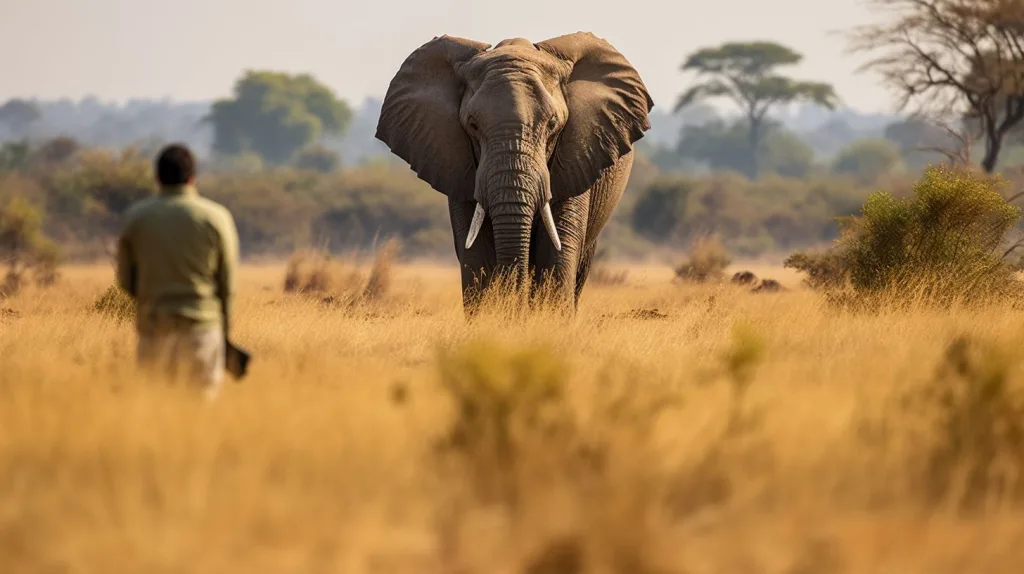
As we kick off another year of exploring Africa’s breathtaking wilderness, we’re excited to share our renewed commitment to ethical and sustainable tourism. We’re doubling down on practices that protect wildlife while delivering authentic, meaningful experiences for our clients.
In today’s world, TV documentaries, social media feeds, and even AI-generated content bombard us with dramatic, up-close wildlife moments—think cheetahs leaping onto vehicles or nature documentaries that take years to film. These portrayals, often captured over months of patient filming, create unrealistic expectations for safari-goers. Guests arrive dreaming of Instagram-worthy “perfect shots,” pressuring guides to push boundaries. But this “quest for closeness” is wildlife tourism’s greatest risk. It leads to stressed animals, altered behaviors, increased injury risks (like cheetahs hurting themselves on vehicles), and even higher mortality rates for vulnerable species, such as cheetah cubs surrounded by vehicle swarms for hours.
At Adventure Expeditions, we refuse to contribute to this cycle. We believe true adventure lies in presence, not intrusion—in witnessing nature on its terms. That’s why we’re fully committing to the following core framework: the 4D Principles for sustainable wildlife encounters. These aren’t just guidelines; they’re our operational standards, ensuring every safari prioritizes animal welfare, guide empowerment, and guest education.
Our 4D Commitment: Distance, Duration, Density, Directional Freedom
Drawing directly from the ATTA white paper’s practical tools, we’ve adapted these principles to our operations across land and marine safaris. Here’s how we define and implement them:
| Principle | Definition | Our Implementation | Why It Matters (from the White Paper) |
| Distance | Maintain appropriate standoff distances tailored to species, behavior, and context to avoid disturbing natural activities. | We adhere to species-specific thresholds: e.g., 50-100m for elephants (more with calves), 30m for big cats, 50m for whales. Guides brief these pre-drive and adjust based on real-time cues. | Proximity causes unseen stress, like elevated cortisol leading to injuries or behavioral changes. Research shows cheetahs in high-tourism areas face higher cub mortality from vehicle pressure. |
| Duration | Limit time at sightings to prevent cumulative stress, with caps adjusted for queues or sensitivity. | 10 minutes if others wait; up to 20 if alone and no stress signs; 5-10 for hunts, dens, or nests. We rotate fairly via radio etiquette. | Prolonged exposure disrupts feeding, hunting, or resting—e.g., two-hour swarms correlate with animal injuries and ecosystem ripple effects like habituated primates. |
| Density | Cap the number of vehicles or vessels at a sighting to avoid crowding. | Limit to 1-3 vehicles (2 max for sensitive scenes like river crossings); use queues with timed handovers. | Overcrowding blocks paths and heightens stress, as seen in viral images of dozens of vehicles halting wildebeest migrations or surrounding cheetahs. |
| Directional Freedom | Ensure animals have unobstructed paths to escape, move, or access resources. | Never block routes to water, shade, or dens; angle vehicles outward; maintain 180-degree escape lines on land or parallel courses at sea. | Blocking freedom triggers aggression or avoidance, turning “harmless” encounters dangerous—e.g., elephants charging after repeated path obstructions. |
To make these principles stick, we follow the white paper’s “set, brief, enforce, review” rhythm:
- Set: Embed 4D rules in our SOPs, aligned with park regulations.
- Brief: Every outing starts with a 90-second ethics script: “Today, we follow four rules that protect wildlife… If I say we’re moving on, it’s because the animal needs space.”
- Enforce: Guides have full authority to exit sightings, backed by management. We use simple tech like radio etiquette boards and digital logs to track compliance.
- Review: Monthly dashboards analyze data (e.g., approach distances, stress-triggered exits) to refine practices.
Why This Matters—and How You Can Join Us
Sustainable encounters aren’t just ethical; they’re essential for business longevity. There is an an “economic paradox”: tourism funds conservation but can undermine it through unchecked pressure. By committing to these principles, we ensure calmer animals, safer experiences, and loyal clients who value respect over spectacle.
Ready to experience wildlife the right way? Book your next adventure with us and be part of the solution.







 +254-722-338 514
 +254-702-183 169